Thursday, 21 July 2011

Published in "The HINDU Business Line"


Sirpur … All set to capture its lost glory
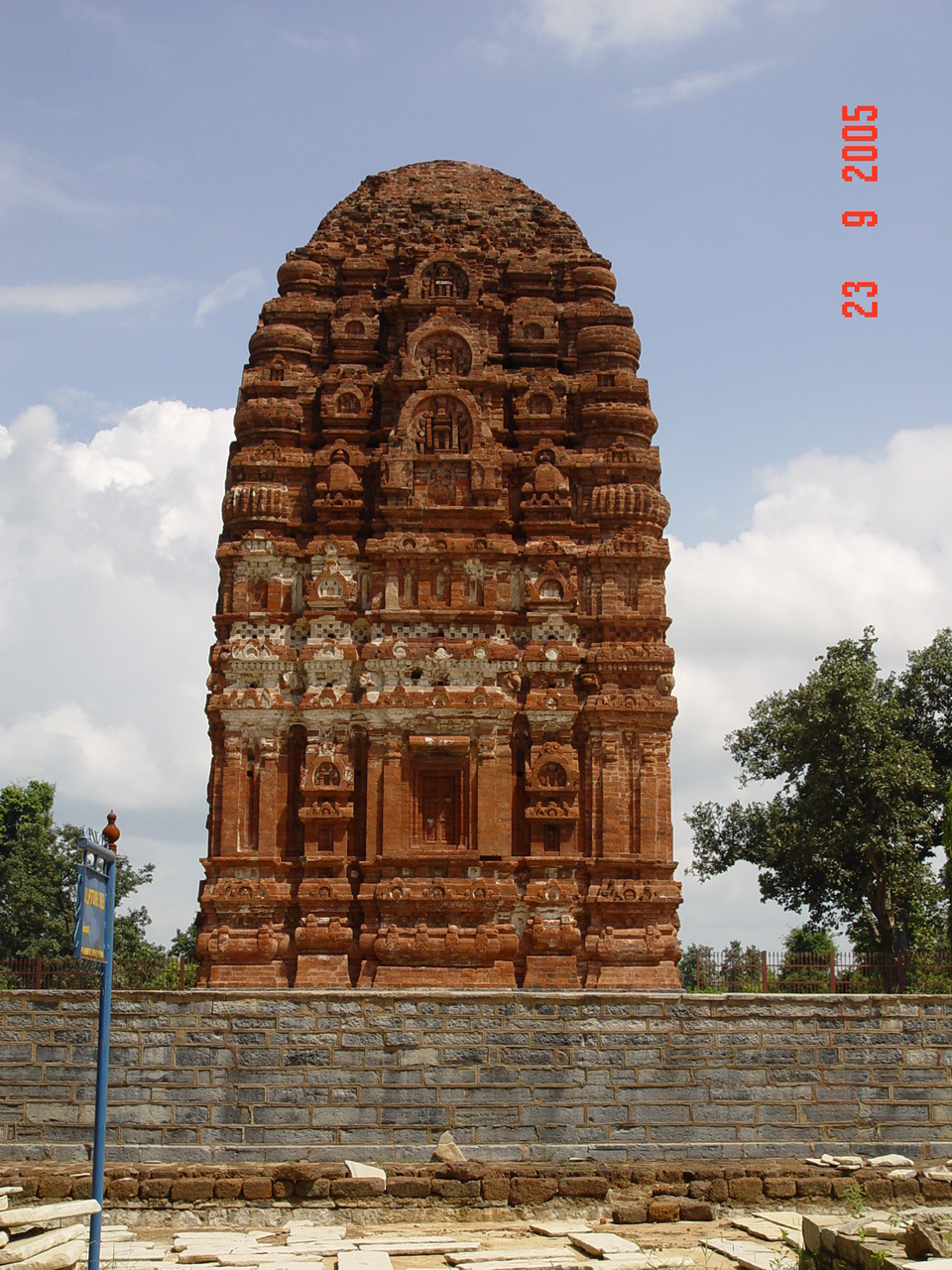


Sirpur was a happening place 1300 years ago. After centuries of being in oblivion, today it has hit a new high on the tourist map of Chhattisgarh and of India. And all thanks to the excavations undertaken by the Archeological Survey of India which has unearthed important Buddhist sites, the 6th century Laxman Temple and a host of idols belonging to that period. Standing on the banks of the Mahanadi in Mahasamund District, atop the ruins of the capital of Dakshin Kosala or Chhattisgarh as it was then known, Sirpur, then known as Shreepur, is all set to recapture its past glory.

We traveled along picturesque landscape on NH 6, flanked by lush greens to reach Sirpur, a distance of roughly 80 km drive from Raipur, the capital of Chhattisgarh. The wooded expanse, the pristine air, made the hour and a half drive exhilarating. Our sojourn assumed a more purposeful aura as a professor of History from Raipur, Shampa Choube accompanied my friend Rita and me on the trip. As we entered the hamlet of Sirpur, there was absolutely no evidence of the fact that the region was once a bustling and flourishing centre of trade that witnessed a constant flow of merchants from China! Yes, it was certainly palpable that it must have had abounding monuments and structures that had become buried under the sands of time. New temples have mushroomed everywhere, almost in clusters, fringed on the shores of the Mahanadi. But our adrenaline levels peaked as we came within sight of the ruins that lay spread over a significant area.


The excavations in Sirpur spread across a six-km radius of the village continue to create excitement in the world of history and archeology. A mutilated idol there, some wrecked sculpted pieces there surface every once in a while adding to the treasure trove of information and architectural beauty that was Sirpur. An intriguing aspect of the findings relate to the presence of statues belonging to Vaishnavaite, Shaivite, Buddhist and Jain religions at one single place. It is surmised that this is perhaps the biggest temple town of the sixth and seventh centuries to be discovered anywhere so far. According to archeological sources another unique feature of the discovery relates to the stone carvings depicting sexual activity among animals that are not seen even at Khajuraho or Ellora.


Having heard so much about the ruins and especially of the Laxman Temple, we first proceeded to this complex. We were awestruck by its sheer size and structure and wondered how such a piece of magnificent work could lie buried for this long a period of time! The temple is believed to be the first such place of worship in India to be built solely of bricks. Also it is supposed to be the only temple dedicated to Laxman, brother of Lord Rama. The temple stands on a six foot high platform and its entrance is adorned with several figures carved in stone. The door frame is of stone and a figure of the reclining Vishnu on the Sheshnag is seen on the Lintel. The panels of the doorway is embellished with statues of the incarnations of Vishnu and his devotees. The high brick roof ends in an imposing shikhar or temple dome, the passage of time write clearly on it.


A caretaker-cum-watchman at the complex guided us to a shed-like structure behind, a few yards from the temple precincts, to the ‘museum’. Here lie stacked numerous rare collection of statues, many of them mutilated pretty severely, belonging to Hinduism, Buddhism and Jainism. One particular headless piece caught our attention as our guide explained to us that it was that of the Buddha – body severed from its head. He informed us that he would get back his full form when the head would get plastered to his body in due course! Of course, we saw several other limbless, headless idols in this room, all waiting to be arranged in an organized form to complete the picture of a true museum.

The Gandheshwar temple dedicated to Lord Shiva and the Buddha Vihara were two other monumental structures that we visited at Sirpur. Renovation works continue to be undertaken in both these complexes even as more idols are being unearthed. A one metre tall statue of Buddha in the lotus position and belonging to the 6th century is one of the largest finds at this site in the present century. Lying close to these temples is the completely ruined site of the Ram temple. A few stone foundation structures are all that remain of what much have been an important temple. History records that the shrine here was the earliest example of star-shaped temple of South Kosala region. The Gandeshwar temple, adorned with idols dating back to eons ago, is today the centre of an annual religious fair and festival coinciding with Shivratri.


The Laxman temple was built supposedly in the 8th century, by Vasata, the daughter of King Suryavarma of Magadh and the mother of Mahashivagupta Balarjun, the Sahivaite ruler who is credited to have built the city of Shreepur, the City of Wealth, as the capital of the kingdom of Mahakosala. However, Vasata was an ardent devotee of Vishnu and she built the temple in memory of her husband Harsha Gupta.

Every religion, especially Buddhism flourished under the royal patronage of Harsha Gupta and his son Balarjun who assumed the title of Mahashivgupta on account of his skills in archery. A connoisseur of art and culture, Mahashivgupta promoted architectural styles of every religion and foremost among edifices that sprung up during his period were several Buddhist monasteries with their intricate motifs. Some copperplate inscriptions and a Chinese coin unearthed at Sirpur point towards the fact that trade was buoyant during the period of Mahashivgupta and this brought along with it exchanges of learning from neighbouring countries as well. Sirpur became an established centre of Buddhism between the 6th and 10th centuries during which period Hieun Tsang is believed to have visited the city.

It is conjectured that Sirpur must have been a major civilization in Central India and that it was a Buddhist study centre, at least four times as vast as Nalanda. This is perhaps gleaned from the Chinese traveler Huien Tsang’s travelogue which mentions Shreepur as having over a hundred Buddhist monasteries inhabited by over 10,000 monks belonging to the Mahayana sect. Present day excavations in the region revealed some conch bangles, giving rise to the opinion among few quarters of archeologists that the monasteries were probably inhabited by Bhikshunis or female monks as well.

Theories abound on the emergence of Sirpur as a flourishing town and its subsequent downfall. Probably a civil war ensued between the Buddhists and Shaiviites of the region resulting in the rulers fleeing their capital to make Orissa their home. Yet others claim that the Raj Mahal or palace at Sirpur was invaded and burnt down. Their claims are supported by the recovery of charcoal during the diggings. Yet others attribute the decline of Sirpur to the decline of trade. Some historians believe that floods alone caused the dilapidation that was Shreepur.


Some of the rare idols from Sirpur are believed to have been stolen for lack of proper security. One such piece, an idol of Goddess Tara is believed to have been stolen in the mid 1960s and is presently enjoying its place of price in a museum in the USA!

An interesting legend is associated with Sirpur. It was a city where coins rained for two and a half days every year. This was a blessing from the Gods who were very happy with the queen of the kingdom. For, she was a devout lady who routinely and fervently meditated upon them on the banks of the Mahanadi after cleansing herself in its waters. Besides, she abstained from imposing tax on her people. However, The Gods’ joy turned to wrath when the queen became greedy and began demanding money as tax from her citizens. Consequently money no longer rained in Sirpur, but the city soon lost its glory and began to decline in importance.

Once a flourishing centre of trade, Sirpur today, though veritably a tourist’s delight, a historian’s palette, is a village which lacks proper communication and other infrastructure.


****************

Sculpture from Scrap

Published in "The HINDU Business Line"

Life - Arts & Crafts
He steels the show!
An artist who has beautified Bhilai with exquisite works crafted from the township's proud product..
Chitra Ramaswamy


Devangan with his Nataraj sculpture

He blazed his way into the Limca Book of Records in 2004 with his smallest creation — a 0.4-mm idol of Lord Ganesha, and hopes to one day make it to the Guinness Book of World Records as well. He has beautified Bhilai Steel Township with his aesthetic landscaping, and is involved in redesigning historical landmarks in Chhattisgarh, including Sirpur and Bhoramdeo, by developing gardens filled with artworks made of scrap, metal, clay and concrete. His works, which were exhibited in Birmingham, UK, have attracted several clients from abroad. His exquisite carvings on rice grain depicting historical monuments and Hindu deities have won accolades.

Meet Ankush Devangan, holder of six postgraduate degrees and on his way to the seventh, who began his career as a driver at the Bhilai Steel Plant in Chhattisgarh. Creative efforts
Made from soft stone, the detailing on his 0.4-mm Ganesha idol are visible only through a magnifying glass. The tiny masterpiece took shape after 500 attempts, and an entire year's untiring labour! “It was a meditation, a sadhna of sorts,” reflects Devangan. “I was inspired to create this idol when I learnt that the smallest idol ever crafted was one of Gautam Buddha, measuring half an inch, somewhere in Afghanistan.”


A huge 42-ft long, 38-ft high copper-coloured sculpture of the Gitopadesa, erected on a 7-ft-high platform, adorns the Civic Centre in Bhilai township. The piece weighing 120 tonnes, made from steel, iron and concrete, took 10 months to complete. The inspiration for the sculpture came from his belief that “work is worship and there is no greater religion than that of karma or doing work” which, he says, perfectly suits the industrial town of Bhilai. A few kilometres away you'll find his majestic Nataraj idol on the lawns of the Bhilai Hotel. The circumference of the idol is adorned with 21 smaller idols in different dance poses. These poses are replicated on a lower frieze. The front and back of this solid idol, again crafted out of steel and concrete, are alike. So you can see the dancing Shiva's face from either side. Devangan has also crafted an unconventional skeletal structure of Radha-Krishna at Maitrayi Bagh, a sprawling garden in the township. The abstract form shows two idols made from steel sheets and a “heart of steel” separating them, symbolic of the materialistic modern man.

His tryst with art
Devangan's tryst with art began in early childhood with paintings of Bollywood stars. Recognising his talent, his parents encouraged him and he began painting national leaders and landscape paintings. Growing up in the Dhalli Rajhara mines area of Chhattisgarh, Devangan had easy access to materials, often scrap, that allowed him to venture into sculpting. With time, he equipped himself with a Diploma in Fine Arts. He would spend endless hours experimenting with an assortment of materials including BHQ (Banded Haematite Quartzite), sandstone, marble, iron, steel, brass, cement and soft stone.


Heart in steel:Bhilai artist Ankush Devangan's abstract Radha-Krishna
Today, Devangan's works of art are the pride of the Dhalli Rajhara area.
Joggers, walkers and cyclists passing through the avenues of bamboo, teak and sal trees at the Sapthagiri Park, maintained by Bhilai Steel Plant, cannot fail to notice his sculptures adorning the 10-acre green sprawl.

Diverse subjects
His sculptures touch on diverse subjects. ‘Udaan', for instance, embodies the power of flight or freedom of today's woman. According to Devangan, “In trying to break free, she is constantly coming up against forces that try to stop her. So instead of making this piece a free-flying one, I've given it a twist, a curve, symbolic of the obstacles she experiences, how she has to constantly battle even against her own conflicting emotions in the process.”


‘Earthquake' has the appearance of a natural stone with panic-stricken people in the grip of a natural calamity, and is crafted out of dolomite. ‘Steelman' in the colours of steel is actually made from concrete and symbolises the hard-working employees of Bhilai Steel Plant.

The artist believes that yoga, safety and health are the core issues of human existence, especially in an industrial setup, and his creation ‘Yoga' — the safety triangle — symbolises this. As a tribute to the organisation that employs him, Devangan crafted ‘Ek Sanyojan', entirely from scrap iron, and this is a complicated structure symbolising the wheel of work.


*******

Pelling - Bliss Divine (Sikkim)

Published in "The Hindu Business Line"


Bliss Divine: Pelling


It is the second week of June and dense fog shrouds the surrounds as we wend our way from our base at Gangtok, to Pelling, West Sikkim. It is obvious that Longfu, a genial native who has been chauffering us around for a week now in this mystical paradise is unperturbed by the thick white veil as he manoeuvres the Indica deftly through winding roads, hairpin bends and sharp curves.


The magic of Sikkim unfolds before us as we make our way through breathtaking terrains that are a heady mixture of rolling tea gardens, luxuriant blossom-ridden valleys, ice-capped, rugged mountains, deep gorges, gurgling streams and gushing waterfalls of varying heights. If nature presents itself in fascinating colours, its people, sporting flamboyant costumes, are just as charming and hospitable. And we get to see their friendliness in ample measure in Longfu too, who is constantly making sure that we are comfortable through our stay and sojourns in Sikkim.

As we get closer to Pelling, the views of India’s highest and the world’s third highest peak, the towering Kangchendzonga or Kanchenjunga at 28,169 feet, appears to close in upon us. Though we do get to view the Himalayan peak from almost anywhere in this tiny state, we realize that it is from Pelling that we get some of best, most uninterrupted views of the mighty range. Of course the mist plays hide and seek with us every few minutes, but we do get to savour the giant peak at least for a few moments without the snowy drape.


While Pelling itself is a tiny nondescript village dotted with typical mountain dwellings, and several upclass hotels and fast food outlets, it is a takeoff point for Khechoepalri Lake, Pemayanste and Sango Choling Monasteries, Kangchendzonga and other waterfalls, Tashiding and Yoksum. After halting for a steaming cup of ginger chai at one of the dhabas, we first head towards Khechoepalri Lake, also known as the Wishing Lake, about 6km away. The serene ambience of the lake, festooned by fluttering prayer flags, is enveloped by greenery. Legend has it that this place was once a grazing ground abounding with stinging nettle, the bark of which the native Lepchas used for various purposes. One day when a Lepcha couple was peeling off the bark, they observed a pair of conch shells plummet at great speed earthwards, pierce the ground and embed into it. The ground trembled violently and thus sprung from it a gigantic well of water that soon spread itself into a lake. The lake, according to Buddhist belief, assumed the shape of the footprint of goddess Tara was considered as the abode of Tshoman Gyalmo or chief protective nymph of the Dharma as blessed by the goddess. Deemed sacred, the lake thus began to be worshipped. Another interesting story associated with the lake is that its sanctity is not only recognized by the avian creatures but the birds also help to keep it clean. Hence none of the falling leaves or foliages from the cornucopia of trees surrounding the lake float on its waters beyond a few minutes since they are pecked off by the soaring, swooping birds in a cleanup act.


Whatever the tales or beliefs, there is a blissful and divine calm that we enjoy in its precincts that includes colorful monastic dwellings. Even as we enjoy the tranquil environs, there are several other tourists who amble along the walkway leading to the edge of the lake, turning the series of prayer wheels as they walk along the path. But for the sound of cameras clicking away, there is perfect silence, meditative and spiritual in effect.

We halfheartedly pull ourselves away from this magical spell cast by the lake and proceed towards Pemayanste, a few kilometers away, at an altitude of 6840 feet. A couple of well fed canines wag their tails in greeting as we enter its portals. Longfu who also doubles up as guide tells us that the monastery is the most important one of the Nyingmapa order of Buddhism and was originally built as a small temple by Latsun Chembo in the late 17th century. It was only during the period of the third Chogyal Chakdor Namgyal, Jigme Pawo, that it came to be restructured in its present, bigger scale. The three-storeyed structure houses several idols, scriptures and objects, priceless for their antiquity. The most predominant feature of Pemayanste as the other monasteries in and around Pelling and in Sikkim itself, is the color within – bright without being loud or garish.


The day progresses to pre-dusk as we reach Kanchengdzonga Waterfalls, about 15km from Pelling en route Yoksum which we give a skip, reserving it for another time. A few hundred metres away from our approach to the waterfalls we can hear the thundering symphony of its tumbling waters. We thrill at the dazzling play of the frothy water against a reluctant sun as it cascades down the granite rocks, its droplets settling gently on our being like shiny specs of pearls.

Unfortunately for us, a mild drizzle that began some moments ago, escalates to a medium shower, forcing me to abandon my antics with the camera. As I enjoy nature’s aqueous drama, I rest content with the couple of shots I managed prior to the downpour, thanking the rain gods for delaying their grand entry to coincide with the fag end of our Sikkim trip.


***********

Cactus Garden, Chandigarh

Published in "The Hindu Business Line


"

Sharp dressed cacti!
CHITRA RAMASWAMY


Get introduced to a mind-boggling variety of prickly plants at the Cactus Garden in Panchkula, near Chandigarh.

Panchkula, a satellite town of Le Corbusier's verdant and immaculately laid-out Chandigarh, is home to the Cactus Garden, believed to be the largest outdoor landscaped turf of its kind in Asia. Also called the National Cactus and Succulent Botanical Garden and Research Centre, this seven-acre verdure is a major crowd-puller with its sheer variety of prickly greenery. Going around the garden we are struck by the realisation that these shrubs of thorn and bristle, which we largely associate with dry and barren deserts, actually take on such lush and beautiful forms!

THORNS WITH FLOWERS
The garden has more than 2,500 species of cacti and succulents. While some species sport blossoms of varying sizes, mostly in shades of red and orange, many others are characteristically leafless; some species, we learn, are endowed with medicinal properties and these attract visits by practitioners of Ayurveda and Unani. This month, tourist influx peaks as the garden hosts the annual Cactus Show.


The security guard, who doubles as our guide, provides several informative nuggets. Contrary to the common belief that cactus flower once every few years, several varieties in fact bloom every year. The labels attached to the plants are very informative too. Right at the garden's entrance is the gigantic pipe organ cactus, beaming a welcome as it stands majestically on a rosette of sword-like blades with barbed edges and needle-tips glittering with gold flowers.

A CACTUS BY ANY OTHER NAME
As we amble along the well laid-out paths, we find ourselves chuckling at some of the names given to the cacti. Mother-in-law's Cushion, a Mexican variety, immediately grabs attention. Elsewhere we chance upon the saguaro, the humungous desert species that can grow to heights of 20-50 ft. Cacti that resemble fluted columns come in several shapes and sizes. The octopus-like ocotillo, with its many arms bearing flame-coloured blossoms, appears coy with a bent head. Some of the rare species on display include the genus caralluma, of Indian origin, which we learn is a threatened species. We come upon names such as pincushion cactus, Englemann's prickly pear, goat's horn cactus, ester, aloe, golden lily, barrel cactus, cholla (skull-head in Spanish), buckhorn, fish-hook cactus and plenty more. We are a bit confused when we come upon similar-looking cacti but with different names. A closer inspection, however, proves that they are indeed different, even if by a whisker!


The garden has three greenhouses that nurture rare and endangered cacti native to India. The clock-face prickly pear and cow's-tongue prickly pear are very similar, except that the former is perfectly spherical while the latter is elliptical. There are some barrel-shaped cacti that distinctly resemble a yellow pumpkin, minus the spikes of course. The Senita cactus is also known as grandfather cactus, thanks to the bearded grey spines adorning the crown of each branch.

We learn that most of the cacti displayed in the garden are gifts from across continents, including a major chunk provided by the garden's architect, Dr J.J. Sarkaria.
Keywords: Cactus Garden, Panchkula, Chandigarh. plants

Marble Marvel of Bedaghat, Jabalpur

Published in "The Hindu Business Line"


Marble Rocks, Bedaghat --- Nature’s Scintillating Canvas


We can hear its thunderous bluster a good distance before we actually approach it. From the sounds I hear I presume its tumble must be ferocious and I can barely wait to get to it. We pass a few marble quarries on our left before our rented Bolero gingerly makes a final leap over a couple of natural speed-breakers and comes to a halt. We have reached our destination! It is the early hours of a December morning and we are visiting the Dhuandhar (meaning ‘smoky’) Waterfalls, and the Marble Rocks at Bhedaghat, Jabalpur’s most famed and oft visited tourist spots. A wintry mist teasingly swirls in front of us in a unique and dazzling dance, obliterating the view before us.


We are the only visitors at this early hour of dawn. I’m doubly happy to enjoy the tranquil beauty of my surrounds in silence that is broken only by the sounds of the raging falls. A narrow platform with railings takes us close to the waterfalls. I sit comfortably on the edge of this stone structure, dangle my legs down and allow my feet to touch the water. My feet waltz in gay abandon as I revel in the fury of the frothy avalanche, unmindful of the December chill. The giant on the horizon is slowly but surely emerging and the sky is a brilliant splash of yellow-orange. I stare mesmerized by the aqueous drama unfolding before me. I marvel at the holy Narmada assuming several traits and shades within moments – calm, placid and innocuous now, tempestuous, menacing and lethal in seconds.


I soak in the calm radiance of the place as jet sprays from the gushing waters gently caress my face, creating a tingling sensation. The pleasure of lazing thus, away from worldly cares and work pressure, is par comparison. The seconds pass into minutes and the minutes would probably have passed into hours if not for my colleague Bharati who shakes me out of my dreamy state. She offers me a steaming cup of adarak chai she has bought from a young chai-wala who has probably just appeared on the scene and is ready to take on another day. By now the entire place is abuzz with visitors and hawkers selling a variety of wares, especially artifacts made from soapstone.
Reluctantly we move on to the next spot on our agenda – the Chausat Yogini Temple, located on a hillock between the Falls and the Marble Rocks. With monkeys accompanying us, we climb a long flight of steps to reach the 10th century temple dedicated to Goddess Durga. The main sanctum is surrounded by a wall that displays sixty four beautifully carved idols of the Goddess. From here the rolling and crashing of the Narmada against the rugged rocks is a spellbinding sight to watch. After savouring the sight of the river from here, we head straight to our final destination – the Marble Rocks.


The Marble Rocks at Bhedaghat, originally called Bhairav Ghat, less than a couple of kilometers away is nature’s scintillating canvas. There is a long queue of tourists at the pier, waiting to hop on to a boat for a cruise along the river between the gorgeous marble cliffs. Raju and Gopal who have been chauffeuring us around on this jaunt, jump into the waters to sanctify themselves while Bharati and I go for the boat ride. The rocks, glistening under the noon sun, rise spectacularly to about a hundred feet on either side of the Narmada, piercing the cobalt blue sky. The winter sun casts its mellow rays on the jagged protrusions and this play of sun and shade on the rock faces is hypnotizing, creating a profusion of tones in green, grey, black and blue.


As we warm to the boat ride, our very “informative” boatman Mohan narrates tales of courage and valour of several Bollywood heroes who had entertained their viewers with histrionics aplenty leaping from these towering cliffs of white-cream limestone seamed by veins of green-grey volcanic rock. As we cruise along a narrow channel of the mighty river, the flanking rocks appear to almost touch each other, earning them the nickname Monkey's Leap. “Madam ji, you know that song, Raat Ka Nasha from Ashoka was picturized at this very spot,” gushes Mohan. No sooner does Mohan “win” our confidence, he tells us in very conspiratorial tones, “Madam ji, these waters can be very deceptive! You just can’t predict when you could get caught in a whirlpool!” Bharati and I exchange nervous looks. We don’t want any more chatter from Mohan lest he embarks on doom stories of how undoubting hapless tourists turned victims of vicious water currents. Fortunately, a change of subject happens as we spot a couple of boys desperately waving out in our direction. “Oh, these youngsters will jump from the rocks for small sums of money,” says Mohan. We are thankful and relieved when the boat makes a turn and returns to the safety of the shores.

We look up heavenwards to see the fiery ball repair for the day. The sunset is a flood of glory and the sky is awash with a beautiful peach-pink-orange hue as the sun goes down serenely in the sparkling waters of the Narmada. No matter how many sunsets and sunrises I see, each time the experience is akin to first love and …

*****

Udaipur - City of Palaces & Lakes

Published in "Hi Fliers"


Of Lakes and Palaces


A cool mist licks my face as I enjoy the steaming cup of tea, sitting in the balcony of our hotel room, overlooking Lake Pichola. I observe from my vantage point the several houses and temple structures stretching out around the lake in a motley of colours. I gather that this is all part of the old city. The day still smells of dawn as I set out on my explorative journey of Udaipur, the fairy tale city of marble palaces, havelis, and rolling hills descending into glassy aquamarine lakes. Narayan chauffers us in and around Udaipur during our three-day sojourn, regaling us with his own little tales from time to time.
We begin our tour of Udaipur by visiting the Lake Palace which is a profusion of art, architecture and colour, built in 1746 by the then ruler of Mewar, Jagat Singh. The magnificent structure appears scintillatingly suspended in water, shimmering and floating out of the crystal blue waters of Pichola, doing its own little jig. Palace and lake both take on a spectacular glow with the illuminations at twilight, leaving us entranced with their almost ethereal beauty. It is claimed that the eight marble porticos of the Palace, commonly referred to as Jagat Niwas, mark the spot where the kings of Mewar were weighed in gold, the equivalent of which was then distributed to the poor! The Palace today is a luxury hotel, yet maintaining its breathtaking grandeur.
As we skim past it various alleys and broad roads – well, it does boast a few wide roads, we are in awe of this romantic city with its breathtaking hilltop fortress and mind boggling palace structures, and more importantly, its polite and hospitable people. That the land gave birth to sons who were known for their courage and valour is amply evident from the numerous architectural works that speak volumes of the famed Sisodia Rajputs and their acts of bravery.
While on the Lake Palace and the city of Udaipur itself, let me digress a little to allow you to have a quick historical recap of the city. It is a part of the Aravalli Hills, and was founded in 1559 by Maharana Udai Singh. Nicknamed Jewel of Mewar, it was ruled by the India’s oldest dynasties, the Sisodia dynasty, back in 566 AD. The actual history of Udaipur it is believed began with the construction of Nouchouki Palace on the banks of a pond dug by a gypsy in the 15th century. Udai Singh is supposed to have extended this pond and created a mammoth manmade lake that he named Pichola after a small hamlet Picholi, located nearby.
Legend has it that Maharana during one of his hunting expeditions chanced upon a sage who was meditating on the hills overlooking Lake Pichola. He blessed Maharana and asked him to build a palace at that very spot as it would be well protected. Thus was born Udaipur, in 1559 A.D, along the shores of Lake Pichola, a kaleidoscope of fairy tale palaces, lakes, temples and gardens. It is recorded that Udai Singh built the Dhuni Mata shrine at that very spot to commemorate this historic meeting.

Coming back to the present, we snake through several alleyways, amidst bustling shopping areas and come upon another of the city’s landmarks. That nature and architecture blend in a harmonious whole is amply seen as we enter the expansive Sahelion Ki Bari or “Garden of the Maids of Honour” with its plush mosaic pools and ornamental fountains. It is said that the garden was built for a queen of Udaipur whose dowry included forty eight maids!

Our visit to the City Palace, a masterpiece in marble and granite, is a revelation – a revelation of architectural beauty and bounty, keeping in step with its grounds that is veritably modernity blending into a historical era. Manek Chowk the palace grounds is ornately landscaped and dotted with shops and emporia, vending colorful souvenirs and other wares symbolic of this romantic city, referred to as the Venice of the East. We come upon a maze of corridors, inter-connected courtyards and rooms in the City Palace, a major section of this being now converted into a museum for public viewing. Needless to say the museum, a treasure trove of art, showcases the heritage of Mewar. The scalloped arched windows with colored glass panes, sculptured bas relief embellishments including the dancing peacocks in Mor Chowk, the aesthetic inlaid-mirror worked walls, the elegantly sculpted Torans signifying manav dharm of the House of Mewar on the eastern wall, are particularly spellbinding. The richly bedecked balcony of Mor Chowk with ornate pillars and delicate glass-inlay work, and a trio of imposing peacocks crafted from blue glass and mirrors, is a landmark, beyond compare. The Mor Chowk itself was built during the reign of Maharana Sajjan Singh and served as an assembly hall on several occasions. Another prominent feature in the City Palace is the Surya Gokhda, the emblem of Surya the Sun God from whom were descendant, the rulers of Mewar.
Udaipur, we realize is more climate friendly than other parts of Rajasthan. Of course we are visiting the city in January when a pleasant winter breeze, interspersed now and then with a misty glow in the early hours of the morning, allows us to explore it with great gusto, keeping us energized through the day. The city has a tropical climate and we learn that the mercury ranges between 28 to 39 degrees Celsius in summers and 28 to 11 degrees Celsius in winters, making this one of the best times to jaunt around.

We finish our first day in Udaipur with a visit to the Jagdish Mandir, which is a couple of yards away from the City Palace. Yet another remarkable structure that dots the city’s skyline with its marble dome.


On our second day of stay at Udaipur, we visit Chittorgarh, the pride and glory of Rajasthan, about 100 km from the Lake city. The capital of the Sisodia dynasty was Chittor till the 6th century, when it was moved to Udaipur. The once formidable citadel, sprawled over an area of 279 hectares, replete with historical monuments, towers and palaces, is now in ruins. Yet one can hear in its silence, the rumbles of battles, of clashing weapons that the mighty stalwarts Rana Sangha and Maharana Pratap fought with the marauding Mughul invaders to recapture their erstwhile capital. Close by to the fort is an aesthetically built Jain temple that we notice attracts visitors by the droves for its sheer architectural brilliance.

On the last day of our stay in Udaipur, we make a kind of pilgrimage tour, offering prayers at Eklingji, and Nathdwara temples, finishing the trip with a flourish by visiting the picturesque Rajsamand Dam and Lake, an area of entrancing calm and serenity. The pilgrimage town of Eklingji, 22 km from Udaipur, is nestled in a deep valley of the Aravali ranges, containing the Eklingji Lake. Photography of the 50 feet high temple, unfortunately, is strictly prohibited, though I manage to sneak a couple of snaps by climbing over the hillocks surrounding the temple area, ably assisted by Narayan. Devoted to Lord Shiva, the temple is a two-storeyed marble structure, built as the royal temple of the Mewars in 734 AD and reconstructed again in the 15th century. The temple, Narayan tells us is most famed for its Nandi built of silver, facing the black marble statue of the four-faced shrine of Lord Eklingji. The western, northern, eastern and southern faces enshrine Lord Brahma, Vishnu, Surya and Rudra in that order with the Shivling being placed among these four faces.
The Krishna temple at Nathdwara, 48 km from Udaipur, famous by the name of Shrinathji is believed to be the most revered and richest 17th century shrine. Once again I am disappointed that photography is not allowed here and all I manage to capture is the alleyway leading to the temple, with hawkers peddling an assortment of wares including antique weapons and the renowned Pichwal paintings for which Nathdwara is famed.

Nature and architecture compete at Rajsamand, the site of a magnificent dam, 66 km from Udaipur, built during the reign of Maharana Raj Singh in 1660. The jewels in the crown of Rajsamand are the carved chhatris and Torans on the embankment.


No visit to a place is complete without bringing back a couple of memorabilia and Udaipur has plenty to offer by way of its ethnic, indigenous artefacts. Pichwai paintings in traditional bright hues, mostly of Lord Krishna, Phad paintings, tie and dye wears, silver and kundan jewelry, marble ware and handiworks in marble and wood, paintings from precious and semiprecious stones, are some of the items that shoppaholics can carry back with them as gifts and souvenirs from Udaipur. Some of the famous shopping areas we visit, more out of curiosity than to bring back bargains are Bada Bazaar, Hathi Pol and Chetak Circle. The places are abuzz with people, most of them tourists, looking to walk away with prize catches.

In terms of cuisine, Udaipur, like the rest of Rajasthan caters to people of varied tastes, ranging from the authentic South and North Indian dishes to the Chinese, Continental and Western, besides its local Rajasthani fare.

While Udaipur is well connected through air, rail and road to most of the important cities of India, travel within Udaipur is best done by hiring a car from one of the many rentals, or moving around in autorickshaws, which like in most of India, have meters that remain dysfunctional!


*****************

Heritage Site - Udaigiri Caves, Vidisha, Madhya Pradesh

Published in "Discover India"


Udaygiri Cave Temples --- Lively Narrations in Stone

How to Reach
Air : The nearest airport is at Bhopal, 60km from Vidisha.

Rail : Vidisha falls enroute Delhi-Chennai.

Road : Regular bus services connect Vidisha with various towns and cities of MP
From Vidisha, autorickshaws and tongas may be hired to reach the caves.


It is mid December and my colleague Bharati Banerjee and I, are on a tour of Madhya Pradesh. Ours is a holiday put together on the spur of the moment, to get away from the mundane official routine. Needless to say, we do not have time to make any railway or hotel reservations. Armed with a map and travel book on the State, we take off in a rented Scorpio with Shiv as our chauffer from Korba, Chhattisgarh where we reside.

Being a dedicated travel buff, I am constantly on the lookout for “unchartered” territory, the lesser known spots that promise exciting and interesting experience. This is probably the reason why I undertake most of my trips by car since it allows me the flexibility to change plans as and when required, and make halts whenever I see something out-of-the-ordinary. This is how Bharati and I chance upon Besnagar, Vidisha and its ancient cave temples of Udaygiri in the wee hours of dawn as we proceed from Sanchi to Jabalpur.


Vidisha, situated in the fork of the Betwa and Bes rivers, is roughly 15km from Sanchi. Once off the main road between Sanchi and Vidisha, we get into the village roads, motorable mud ones that take us right up to the caves. Fields and huts dot the route that gets a trifle isolated as we approach the caves. I am at once reminded of Ajanta, Ellora, Badami and several other cave structures in India, as we come upon this kilometer long rock-hewn cave sanctuaries, carved into a sandstone hill, standing sentinel-like on the horizon. Yet, these hill caves of Udaygiri, meaning Sunrise Hills, awash in the gentle glow of the rising sun, bear little semblance to their better known counterparts that are gigantic by comparison. The east-facing Udaigiri is located between Sunpura and Udaygiri villages, an isolated hillock rising about 110m above the surrounding plains. Its dark rocks, craggy folds and steep face lend it an aura of romance and mysticism at first glance.

Having gotten over our initial awe on coming upon Udaygiri, we realize there is not a soul in sight who could tell us something about this Gupta period marvel that dates back to the 3rd century AD. We also notice that the entrances to the cave temples are gated and locked. Even as we wonder how we’d surmount this problem, Kishan, the caretaker of the caves who also doubles up as guide, cycles down to where we are, having spotted us from a distance.


After a little bit of coaxing, he agrees to open the iron doors to some of the cave temples. Vidisha, during the 5th and 6th centuries BC was an important trade centre and bustling city that came under the sway of the Sungas, Nagas, Satvahanas and later the Guptas. Emperor Ashoka was its governor during the 3rd century busy as evidenced from Kalidasa’s Meghdoot However, the city it is believed was deserted after the 6th century AD before it once again sprung to light and life in the medieval ages, between the 9th and 12th centuries AD, known then as Bhilsa. While it was subsequently ruled by the Malwa Sultans, Mughuls and Scindias, it is not clear as to when the cave temples of Udaygiri came to be discovered.

While most of the caves lie scattered near the foot of the rock, we observe on top, the remains of an ancient temple with one of the twenty caves a little below it. That’s cave 18, enlightens Kishan. The caves apparently have been numbered in the order in which they have been excavated.
The rock-cut cave temples date back to the Gupta period, from 320-600 AD. Pointing to some faint inscriptions in Pali, Kishan tells us that the caves were cut probably around the era of Chandragupta II between 382-401 A.D. Two of the caves are dedicated to the Jain Tirthankaras while the rest contain Hindu deities. We notice that not all caves have sculptures in them.
Cave number one displays a frontage formed from a natural ledge of rock, giving rise to the cave itself and its structural portico with front of pillars having capitals in vase and foliage design. As we proceed further to the subsequent caves, we realize they are getting larger and more ornate with richly carved facades and doorways, showcasing a pantheon of Hindu deities and mythological characters, though Vishnu predominates.


Kishan at once leads us to the most compelling shrine, that of Lord Vishnu as Varaha in Cave 5. This is veritably the most arresting of all the cave sculptures, the single most significant piece that is reason enough for one to visit Udaygiri. The scene is a most lively narration of Lord Vishnu’s incarnation as Varaha, the gigantic boar that dives into the ocean depths to save Mother Earth. The only one of its kind anywhere in the world, this 4m tall statue of Lord Varaha is flanked on the sides by the river goddesses Ganga and Yamuna on their mounts.

It is at once evident from the figures on the right hand side of the Varaha idol that the vagaries of weather have made dull, the colour of the sculptures that must have been brick-red originally. The legend of Varaha triumphantly holding up the Earth on his massive shoulder, to the admiration and adoration of onlooking sages and other heavenly characters, unfolds itself before us in the deft carvings. Another particularly eye-catching huge idol is that of the reclining Vishnu in an open cave.

The sculptural and architectural style in these caves is distinctly decorative, giving play to the most minute of details. The sculptural creations bespeak volumes of the skills and artistry of the Besnagar craftsmen under the Guptas. The caves bear testimony to a splendid past typified by richness of expression on sandstone, created with utmost precision, using the most primitive of tools. If the sculptures are rich in execution, they exhibit simple beauty, characteristic of art during the reign of the Guptas.
******